Retatrutide: what it is, what the trials actually measured, and when it might be available

The short answer
Retatrutide is an investigational once-weekly injection from Eli Lilly that activates three hormone receptors: GIP, GLP-1 and glucagon. In Lilly's phase 3 TRIUMPH-1 trial, the 12 mg dose produced an average 28.3% weight loss at 80 weeks. It is not FDA-approved; Lilly plans to submit it for approval in the first quarter of 2027.
Retatrutide is the weight-loss compound people are talking about in 2026. Lilly’s phase 3 trials reported average weight loss of up to 28.7% on the highest dose (Lilly, Dec 11, 2025), and numbers like that have carried it from medical journals into Reddit groups and podcasts long before any approval (The Guardian, August 31, 2026). This page is the network’s overview: what retatrutide is, what Lilly’s trials actually measured, what side effects showed up, how it compares with the drugs people already know, what it costs, and why it dominates the conversation. Every figure links to its source, and the hype stays out.
What is retatrutide?
Retatrutide is an investigational once-weekly injectable medicine developed by Eli Lilly for obesity and related conditions. Its research code is LY3437943, and it is a single molecule that activates three hormone receptors at once: the GIP receptor, the GLP-1 receptor and the glucagon receptor. That is why it is called a “triple agonist” (Coskun et al., Cell Metabolism, 2022).
The key word is investigational. Lilly describes it as “an investigational, once-weekly, triple hormone receptor agonist” that it is still studying in phase 3 trials for obesity, type 2 diabetes, knee osteoarthritis pain, obstructive sleep apnea, chronic low back pain, cardiovascular and kidney outcomes, and fatty liver disease (Eli Lilly, July 23, 2026).
Is retatrutide a peptide?
Yes. The Lilly scientists who first described it call it “a novel triple agonist peptide” (Coskun et al., 2022). That puts it in the same broad family as semaglutide and tirzepatide, which are also peptide drugs. For how approved peptide medicines differ from the research peptides sold online, see our explainer on what peptides are.
How does retatrutide work?
Retatrutide works by switching on three gut-hormone receptors that each push on weight in a different way. In the discovery paper, Lilly’s researchers reported that in obese mice the GIP and GLP-1 activity reduced calorie intake, while the glucagon-receptor activity added an increase in energy expenditure, and the two effects together produced more weight loss (Coskun et al., 2022). In lab assays the molecule was more active at the GIP receptor than at the other two.
Put simply:
- GLP-1 receptor: the pathway behind Ozempic and Wegovy. The Wegovy label describes GLP-1 as “a physiological regulator of appetite and caloric intake” (Wegovy label, DailyMed).
- GIP receptor: the second incretin pathway, which tirzepatide (Mounjaro, Zepbound) targets alongside GLP-1 (The Guardian, August 31, 2026).
- Glucagon receptor: the new piece. In the mouse work it added an increase in energy expenditure on top of the drop in calorie intake (Coskun et al., 2022).
The energy-expenditure part is an animal finding. Whether the same mechanism explains the human results has not been settled; the human trials measured weight and health markers, not the share of the effect each receptor contributes.
Is retatrutide a GLP-1?
Partly. Retatrutide is a GLP-1 receptor agonist, but it is not only that: it also activates the GIP and glucagon receptors (Coskun et al., 2022). You will see it called “GLP-3” online. That is a nickname for its three-receptor design, not a scientific name; there is no hormone called GLP-3, and the three targets are GIP, GLP-1 and glucagon. For how the GLP-1 class works in general, Modern Weight Medicine covers it in how GLP-1 medications work for weight loss.
What does retatrutide do, and why do people want it?
In trials, retatrutide lowers body weight, and it also lowered blood sugar in people with type 2 diabetes and knee pain in people with osteoarthritis. People are interested in it for three overlapping reasons, which show up in both the trial program and the online conversation:
- Large headline numbers. Average weight loss of up to 28.3% at 80 weeks in TRIUMPH-1 is what draws attention (Lilly, May 21, 2026), though none of Lilly’s announcements reports a head-to-head trial against an approved drug.
- A next step after a plateau. An endocrinologist interviewed by The Guardian said most patients who ask her about it have already reached the highest dose of Zepbound without hitting their target weight (The Guardian, August 31, 2026).
- Weight-related conditions. Lilly is testing it in diabetes, heart disease, knee osteoarthritis and sleep apnea, so its possible uses go beyond the scale (Eli Lilly, July 23, 2026).
What did the retatrutide trials actually measure?
The evidence for retatrutide is large randomized, placebo-controlled human trials, which is a strong level of evidence, with one caveat: the phase 3 results so far are topline company announcements that have not yet been published in full in peer-reviewed journals. Lilly says the detailed results will be presented at medical meetings and published later (Eli Lilly, July 23, 2026).
| Trial (reported) | Who was studied | Length | Highest-dose average weight change | Placebo |
|---|---|---|---|---|
| Phase 2, NEJM (2023) | 338 adults with obesity or overweight | 48 weeks | -24.2% (12 mg) | -2.1% |
| TRIUMPH-4 (Dec 2025) | 445 adults with obesity or overweight and knee osteoarthritis | 68 weeks | -28.7% (12 mg) | -2.1% |
| TRIUMPH-1 (May 2026) | 2,339 adults with obesity or overweight, no diabetes | 80 weeks | -28.3% (12 mg) | -2.2% |
| TRIUMPH-2 (July 2026) | 1,152 adults with obesity or overweight and type 2 diabetes | 80 weeks | -20.8% (12 mg) | -4.0% |
| TRIUMPH-3 (July 2026) | 1,949 adults with severe obesity and established heart disease | 80 weeks | -22.6% (12 mg) | -3.2% |
Sources: Jastreboff et al., NEJM 2023; Lilly, Dec 11, 2025; Lilly, May 21, 2026; Lilly, July 23, 2026. The phase 3 figures are Lilly’s “efficacy estimand”, which estimates the effect had everyone stayed on treatment; Lilly’s treatment-regimen estimand for TRIUMPH-1, which counts everyone regardless of adherence, was -25.0% on 12 mg (Lilly, May 21, 2026).
Two details matter when reading those numbers. First, they are averages: in TRIUMPH-1, 45.3% of people on 12 mg lost at least 30% of their weight, which also means more than half did not (Lilly, May 21, 2026). Second, people with type 2 diabetes lost less, a group Lilly itself describes as having “increased difficulties losing weight”. Lilly also says retatrutide has now been positive across five phase 3 studies in total (Lilly, July 23, 2026).
How it was given in the trials, reported for context and not as guidance: in TRIUMPH-1 it was given once a week, started at 2 mg, and stepped up every four weeks to a target of 4 mg, 9 mg or 12 mg (Lilly, May 21, 2026); the phase 2 trial gave it as a subcutaneous injection (Jastreboff et al., 2023). In phase 2, starting at 2 mg rather than 4 mg partly reduced stomach side effects (Jastreboff et al., 2023).
Retatrutide benefits beyond the scale
Beyond weight, the trials reported improvements in several health markers, with one important exception on heart events. The reported findings, all from company toplines:
- Blood sugar. In TRIUMPH-2, A1C fell by up to an average of 1.6 points from a baseline of 7.7% (Lilly, July 23, 2026).
- Heart risk factors. In TRIUMPH-3, the highest dose cut triglycerides by 37.0%, non-HDL cholesterol by 16.5%, systolic blood pressure by 9.3 mmHg and the inflammation marker hsCRP by 51.2% on average (Lilly, July 23, 2026).
- Knee pain. In TRIUMPH-4, knee osteoarthritis pain scores fell by an average of 4.4 to 4.5 points on a 0 to 10 scale, against 2.4 points on placebo; in percentage terms, from a post-hoc analysis, that is about three quarters against about 40% (Lilly, Dec 11, 2025).
- Heart events: not shown. TRIUMPH-3 did not show a clear reduction in major cardiovascular events. Events were fewer than expected in both groups, and the hazard ratios (0.82 for the broader measure, 1.12 for the narrower one) had confidence intervals crossing 1, meaning no significant difference either way (Lilly, July 23, 2026).
Retatrutide side effects
The most common side effects of retatrutide are stomach-related (nausea, diarrhea, constipation and vomiting), and they rise with dose. In TRIUMPH-1, nausea was reported by 28.6%, 38.4% and 42.4% of people on 4 mg, 9 mg and 12 mg, against 14.8% on placebo, and vomiting by 10.6%, 22.8% and 25.3% against 4.8% (Lilly, May 21, 2026).
Three signals are more specific to retatrutide and worth knowing:
- Dysesthesia (abnormal skin sensations). It occurred in 5.1% to 12.5% of retatrutide users in TRIUMPH-1 against 0.9% on placebo, and in 20.9% on 12 mg in TRIUMPH-4. Lilly says most cases were mild to moderate and resolved during treatment (Lilly, May 21, 2026; Lilly, Dec 11, 2025).
- Heart rate. Phase 2 saw dose-dependent increases in heart rate that peaked at 24 weeks and then declined (Jastreboff et al., 2023).
- Stopping because of side effects. In TRIUMPH-1, 11.3% stopped on 12 mg against 4.9% on placebo; in TRIUMPH-4 it was 18.2% on 12 mg, a figure Lilly says included people who stopped over what they saw as excessive weight loss (Lilly, May 21, 2026; Lilly, Dec 11, 2025).
Rarer and longer-term risks are what the full publications and the FDA review will characterize, so the complete safety picture is not known yet. Our explainer on peptide side effects and what the evidence shows puts these numbers alongside the wider class.
Is retatrutide the same as Ozempic?
No. Ozempic is semaglutide, which activates one receptor (GLP-1); Zepbound and Mounjaro are tirzepatide, which activates two (GIP and GLP-1); retatrutide activates three (GIP, GLP-1 and glucagon). The trial averages are not directly comparable, because they come from separate trials with different populations and lengths.
| Medicine | Receptors activated | How often | Status (October 2026) |
|---|---|---|---|
| Semaglutide (Ozempic, Wegovy) | GLP-1 | Weekly | FDA-approved (Ozempic for type 2 diabetes, Wegovy for weight) |
| Tirzepatide (Mounjaro, Zepbound) | GIP + GLP-1 | Weekly | FDA-approved (Zepbound for weight and sleep apnea) |
| Retatrutide | GIP + GLP-1 + glucagon | Weekly | Investigational; not FDA-approved |
Sources: the Ozempic and Wegovy labels on DailyMed; Zepbound’s indications as listed in Lilly’s July 2026 release; receptor targets from Coskun et al., 2022. For how the two approved drugs compare with each other, Modern Weight Medicine covers semaglutide vs tirzepatide.
What does retatrutide cost?
There is no official price for retatrutide, because it has not been approved; none of Lilly’s trial announcements gives one. What people see instead are online listings. The storefront this site links to in its “Where it’s sold” card listed retatrutide at $172 for one month, or $127 a month on a three-month plan, when we checked on October 12, 2026, and described its vials as retatrutide combined with vitamin B12, a combination Lilly’s trials did not test. The trial results on this page describe Lilly’s own product, not products sold online under the name. For what the approved GLP-1 medicines cost, see our 2026 peptide and GLP-1 cost index.
Why retatrutide is trending on Reddit and social media
Published reporting points to two drivers: trial headlines spreading online, and people who have already used a GLP-1 looking for a next step. A researcher behind a preprint study told Medscape that demand has been driven largely by social media, peptide forums and press reports (Medscape, August 26, 2026). We do not yet have our own community-tracker data for retatrutide, so this section summarizes published reporting rather than quoting posts.
What the reporting shows:
- The forum is big. The Guardian reported that a Reddit community devoted to the drug gets more than 179,000 visits a week, and that it hosts a beginner’s guide to finding the drug outside a trial (The Guardian, August 31, 2026).
- Plateau stories drive interest. An endocrinologist quoted by The Guardian describes patients who stalled on tirzepatide and people who like being at the cutting edge; one user interviewed reported skin sensitivity, which lines up with the dysesthesia signal in the trials (The Guardian, August 31, 2026).
- Myth vs evidence: “you’ll lose 28%.” A preprint analysis of health records, not yet peer-reviewed and observational, found people using retatrutide bought outside trials lost about 7.2% at 6 to 12 months, against 15.5% for trial participants in the same records, while still showing the heart-rate rise (Medscape, August 26, 2026). The same analysis found use outside trials grew about 1.8-fold per quarter from October 2023 to March 2026, and that some products were recorded as blends with other unapproved peptides.
The honest read: the excitement is grounded in real trial data, but the trial averages describe Lilly’s drug given under supervision, and the early real-world signal suggests online products do not reliably match them.
When will retatrutide be available?
Lilly says it plans to submit retatrutide to the FDA for approval in the first quarter of 2027 (Lilly, July 23, 2026). A submission starts the FDA’s review; it is not an approval, and no approval date can be known in advance.
Before then, Lilly’s drug is reached through its clinical trials and, since August 2026, a limited expanded access program (The Guardian, August 31, 2026). Lilly’s registry entry for the program lists adults with a BMI of 35 or more despite the highest available dose of a weight-management medicine, at least two serious or life-threatening obesity-related complications, and no access to a retatrutide trial (ClinicalTrials.gov, NCT07629401). An endocrinologist quoted by The Guardian called qualifying “just so unbelievably difficult”.
Status: Investigational; not FDA-approved. Lilly plans to submit it for approval in Q1 2027. What this means.
Educational information only, not medical advice. Trial figures are as reported in the cited publications and company releases as of October 12, 2026.
Sources (10)
Advertising disclosure: links marked "Paid link" go to Bodybuilding Peptides (trybbpeptides.com), an affiliate destination, and The Treatment Report may earn a commission if you buy there. Our coverage is independent of that relationship, and nothing on this page is medical or legal advice.
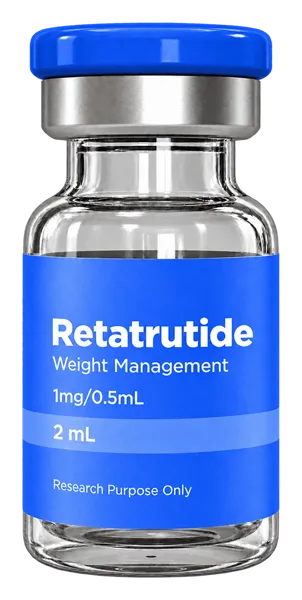 See it at Bodybuilding Peptides