5-Amino-1MQ: the 'fat-loss peptide' that is actually a small molecule
The short answer
5-Amino-1MQ is a small molecule, not a peptide, that blocks an enzyme called NNMT. In cultured fat cells it raised NAD+ levels and reduced fat formation, and in obese mice it caused weight loss without lowering food intake. No human trial is registered on ClinicalTrials.gov and we found none published, so its effects and safety in people are unknown.
5-Amino-1MQ gets talked about as a “fat-loss peptide,” and the store linked on this page lists it in the same weight-loss category as the peptide MOTS-c. The label is wrong. 5-Amino-1MQ is a small molecule with no amino acids in it, and the research behind it is a handful of cell and mouse studies, mostly from one research group. This page explains what it is, what it does in those studies, what is not known, how it compares with compounds it is grouped with, and what is known about stacking it. Every scientific claim links to its primary source. It is educational only, and nothing here is medical advice. For background on the category it gets lumped into, see our explainer on what peptides are.
What is 5-Amino-1MQ?
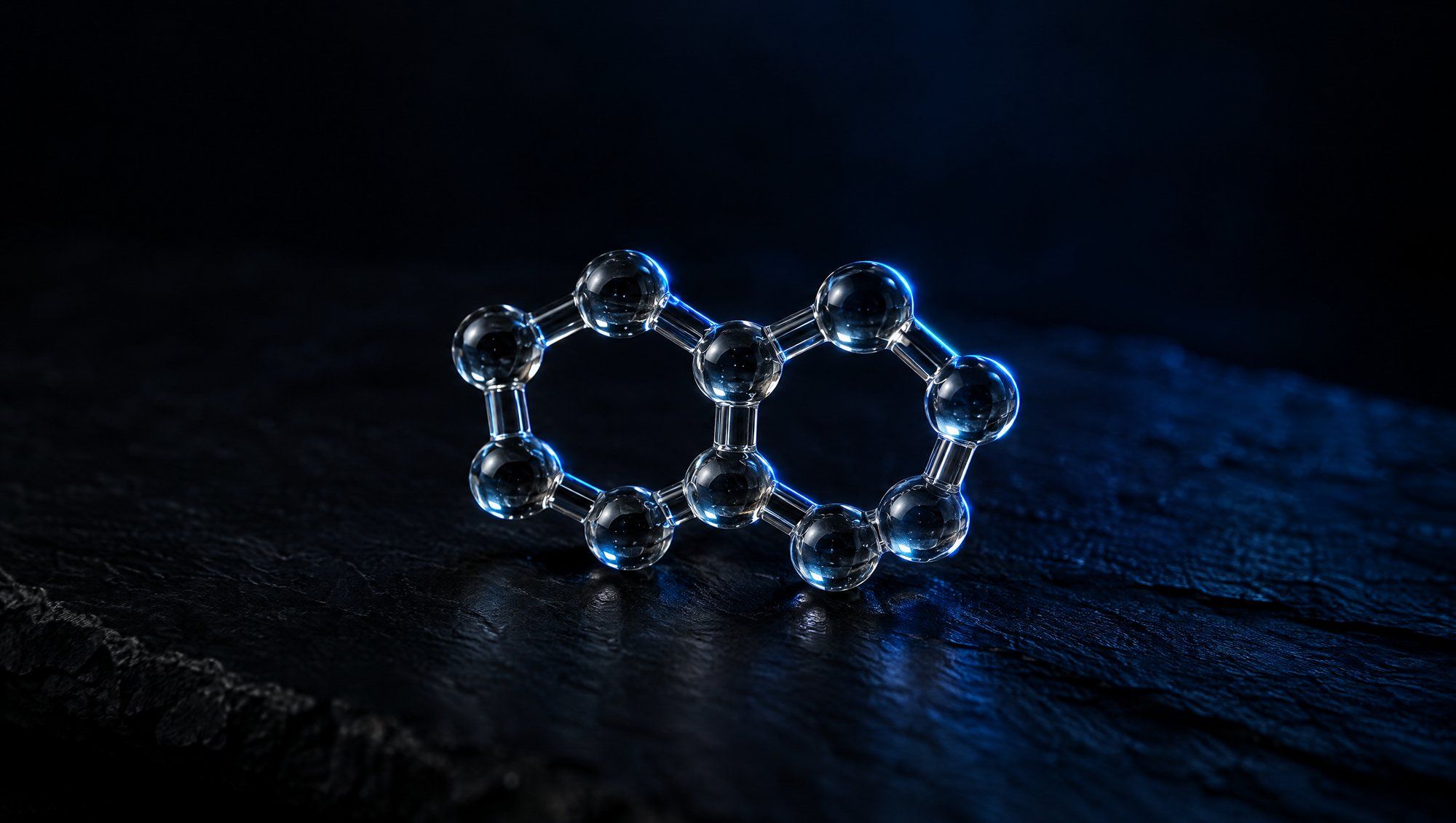
5-Amino-1MQ is a small synthetic molecule that blocks an enzyme called nicotinamide N-methyltransferase, or NNMT. Its full chemical name is 5-amino-1-methylquinolinium, and PubChem lists it as 1-methylquinolin-1-ium-5-amine, formula C10H11N2+, with a molecular weight of about 159. In plain terms, it is a quinoline ring system (two fused six-sided rings) carrying a positive charge, a methyl group and an amine group.
It came out of research at the University of Texas Medical Branch, where scientists built a series of methylquinolinium compounds and tested which ones could get into cells and block NNMT. In their 2018 paper, 5-amino-1MQ combined high membrane permeability, no inhibition of the related enzymes tested, and the greatest reduction of the enzyme’s product inside fat cells at the concentration compared. That paper is still the foundation of nearly everything said about it online.
Is 5-Amino-1MQ a peptide?
No. A peptide is a chain of amino acids joined by peptide bonds; MOTS-c, for comparison, is a 16-amino-acid peptide. 5-Amino-1MQ has no amino acids in it at all. Researchers describe it as a small molecule NNMT inhibitor, which is the accurate term.
The peptide label comes from where it is sold rather than from its chemistry: it sits in the same storefronts and weight-loss categories as research peptides. The practical difference shows up in the format. The store linked on this page sells 5-Amino-1MQ as an oral tablet and MOTS-c as an injectable.
What does 5-Amino-1MQ do?
In lab studies, 5-Amino-1MQ blocks NNMT, and blocking NNMT appears to leave fat cells with more of two molecules involved in energy use: NAD+ and SAM. NNMT uses SAM (S-adenosylmethionine) as a methyl donor to methylate nicotinamide, a form of vitamin B3 that the body also uses to make NAD+. The groundwork came from a 2014 Nature study, which found that NNMT expression is increased in the fat tissue and liver of obese and diabetic mice, and that knocking NNMT down protected mice against diet-induced obesity by raising cellular energy expenditure. That study knocked down the enzyme’s expression; it did not use a small-molecule drug.
The 2018 paper tested whether a drug could do something similar. In cultured fat cells, the NNMT inhibitors reduced the enzyme’s product, increased intracellular NAD+ and SAM, and suppressed lipogenesis, meaning the cells stored less fat. The same paper reported that 5-amino-1MQ did not inhibit related methyltransferases or the NAD+ salvage enzymes it tested, which the authors read as a sign it is selective for NNMT. The working theory is that more NAD+ and SAM inside fat cells pushes them toward burning energy rather than storing it. That theory rests on cells and mice.
How and why do people use 5-Amino-1MQ?
5-Amino-1MQ is sold mainly as a fat-loss compound; the store linked on this page lists it under weight loss. The uses attached to it map onto three research threads, and each thread is only as strong as its mouse data:
- Fat loss. This is the headline use, drawn from the obese-mouse studies described below.
- Muscle in older age. Two studies in aged mice reported stronger, better-regenerating muscle.
- The NAD+ angle. Because blocking NNMT raised NAD+ in fat cells, it connects to the wider NAD+ topic. Our longevity publication covers that in NAD+ versus peptides for longevity.
The oral tablet format also sets it apart from the injectable peptides it is sold beside. No study has measured how well it is absorbed when a person swallows it.
What does the research on 5-Amino-1MQ show?
The evidence for 5-Amino-1MQ is cell and mouse studies only, with no human trials. Searching the ClinicalTrials.gov registry on October 12, 2026 for “5-amino-1MQ”, “5-amino-1-methylquinolinium” and “NNMT inhibitor” returned zero registered studies for each term. PeptideAgent’s 5-Amino-1MQ profile grades it the same way, as animal-only evidence. Here is what the published animal work reported:
| Study | Model | What was reported |
|---|---|---|
| Neelakantan et al., 2018, Biochemical Pharmacology | Fat cells in culture; diet-induced obese mice, 9 per group, 11 days | Treated mice lost about 5.1% of body weight while controls gained about 1.4%; food intake did not differ; one white-fat depot was about 35% smaller and total cholesterol about 30% lower |
| Neelakantan et al., 2019, Biochemical Pharmacology | 24-month-old mice after a muscle injury | Muscle stem cells were more active, regenerating fibers were nearly twice as large in cross-section, and peak torque of the injured muscle was about 70% higher than in controls |
| Sampson et al., 2021, Scientific Reports | Diet-induced obese mice switched to a lean diet | Adding the NNMT inhibitor to the diet switch sped up and improved weight and fat loss compared with the diet switch alone |
| Dimet-Wiley et al., 2024, Scientific Reports | 22-to-24-month-old mice, with or without intensive exercise, 8 weeks | Treated sedentary mice had about 40% greater grip strength than sedentary controls, versus about 20% for exercise alone, and about 60% with both |
The fat-loss result is the one people quote, and it is genuinely interesting within its limits. In the 2018 study, the obese mice given 5-amino-1MQ lost weight while eating about the same amount as controls, which the authors took as a sign that the weight loss is primarily related to altered metabolism rather than appetite. That is the main reason the compound is pitched as different from appetite-suppressing drugs. The study was also small (nine mice per group) and short (11 days).
The diet study is the one most relevant to how people actually use it. In that work, the lean-diet mice given vehicle lost weight early and then plateaued with slight regain, while the mice given the NNMT inhibitor kept losing, ending with a cumulative body weight loss of 6.3 grams that was statistically different from the diet switch alone. A follow-up paper on the same model reported that the treated mice ended up with body weight indistinguishable from lean control mice, with a distinct gut-microbiome pattern.
Two caveats belong next to every one of these results. First, they are all mouse or cell findings, and results in mice do not necessarily carry over to people. Second, most of this literature comes from one group, and the later papers disclose that the senior author is the founder of Ridgeline Therapeutics, a company developing NNMT inhibitors, and that co-authors are its employees. That does not make the data wrong, but independent replication is mostly missing.
How long does 5-Amino-1MQ take to work?
Nobody knows how long it takes in people, because it has never been tested in people. In the 2018 mouse study, body weight differences between treated and control mice were statistically significant on days 6, 9 and 10 of the 11-day treatment, and the 2024 muscle study ran for eight weeks. Mice are not small people, so those timelines say nothing reliable about how a person would respond, if at all.
What are the risks and side effects of 5-Amino-1MQ?
The risks of 5-Amino-1MQ in humans are unknown, because there is no human safety data at all. What exists is animal observation. In the 2018 study, a small dose-escalation test in two obese mice found a daily level that was well tolerated with no observable adverse effects, and the authors reported that treatment did not change food intake. “No observable adverse effects” in two mice over a short test is a starting point for drug development, not a safety profile.
Some specific unknowns are worth naming:
- Long-term effects. The longest study cited here ran eight weeks in mice. We found no study of what months of daily use does.
- Cell toxicity at high concentrations. The 2018 paper saw modest toxicity to its mouse fat-cell line at higher concentrations and did not test concentrations above 60 µM in fat cells due to known cytotoxic effects in that cell line. How that translates to a swallowed tablet is unknown.
- Absorption by mouth. The 2018, 2019 and 2024 studies gave the compound by injection under the skin, and the 2024 paper reported rapid and substantial absorption after subcutaneous dosing and a half-life of about 7 hours in mice. We found no published human data on oral absorption.
- Interactions. Because it acts on a pathway that handles vitamin B3 and methyl groups, interactions with niacin-type supplements or medications are open questions, and we found no study of them.
- Product quality. There is no FDA-approved version, so what is in a given tablet depends on the seller and the pharmacy that made it.
People who are pregnant, managing a chronic condition, or taking prescription medication have no data to go on, which is a reason to talk to a clinician first. Our hub page on what the evidence shows about peptide side effects explains the general product-quality issues in more depth.
5-Amino-1MQ vs MOTS-c vs retatrutide
5-Amino-1MQ, MOTS-c and retatrutide are all discussed as weight-loss compounds, but they are three very different kinds of compound with very different evidence behind them:
| 5-Amino-1MQ | MOTS-c | Retatrutide | |
|---|---|---|---|
| What it is | Small-molecule NNMT inhibitor | 16-amino-acid mitochondrial peptide | Injectable GIP, GLP-1 and glucagon receptor agonist (NEJM, 2023) |
| Peptide? | No | Yes | Yes |
| Proposed mechanism | Blocks NNMT; raises NAD+ and SAM in fat cells | Leads to activation of AMPK, the cell’s energy sensor | Activates GIP, GLP-1 and glucagon receptors |
| Evidence level | Cell and mouse studies only | Cell and mouse studies in the founding paper | Randomized human trials: phase 2 published; phase 3 results announced by Lilly |
| Human weight data | None | None in the research cited here | 24.2% mean loss at 48 weeks on the top dose in phase 2 |
| Form sold online | Oral tablet | Injectable | Injectable |
The table makes the main point plainly: of the three, only retatrutide has human weight-loss results, and 5-Amino-1MQ has the thinnest evidence. For more on each, see our overviews of MOTS-c and retatrutide.
What is known about 5-Amino-1MQ stacks?
Any case for stacking 5-Amino-1MQ rests on how the mechanisms are described, not on tested combinations. We found no published study combining it with MOTS-c, NAD+ precursors or a GLP-1 drug. The logic behind each pairing:
- With MOTS-c. Both are presented as metabolism compounds, and both have exercise-related research: MOTS-c’s primary target in the founding mouse work appears to be skeletal muscle, and the 2024 5-amino-1MQ paper was titled around NNMT inhibition that “mimics and boosts exercise-mediated improvements in muscle function in aged mice”. The store linked on this page lists the two together in its weight-loss category.
- With NAD+ precursors. Since blocking NNMT raised NAD+ in fat cells, the proposed logic for pairing it with NMN or NR is that one adds NAD+ raw material while the other slows a drain on it. That idea has not been tested in people.
- With GLP-1 drugs or a diet. The appetite-independent mouse result invites the idea of adding it to something that cuts intake. The closest evidence is the mouse diet-switch study above, where the combination beat the diet alone. A diet is not a drug, and that result has not been shown in humans.
Stacking adds a second problem on top of thin evidence: when someone takes three things at once and feels different, there is no way to tell which one did anything.
How much does 5-Amino-1MQ cost?
5-Amino-1MQ is sold as a 50 mg oral tablet, and on October 12, 2026 the store linked on this page listed it at $242 for a one-month plan or $187 per month on a three-month plan. Prices change, and other sellers and compounding pharmacies set their own. Because there are no human studies, there is also no evidence-based way to judge whether a given amount is worth paying for, which is the main thing to weigh before spending anything.
What is the community saying about 5-Amino-1MQ?
We do not yet have data to characterize the online conversation about 5-Amino-1MQ. Our Community Insights tracker, which collects and summarizes posts for substances such as MOTS-c, has not built a dataset for 5-Amino-1MQ yet, so this page does not quote users or characterize what they report. When that data exists, it will be summarized here with dates and sources.
What we can say from the research side is that any user report is an N=1 account of a compound with no human trials, usually taken alongside diet changes, training or other compounds. That makes even a sincere report very hard to interpret.
How to think about 5-Amino-1MQ
The most useful way to read 5-Amino-1MQ is as an early-stage drug-discovery compound that reached consumers before it reached a clinical trial. The chemistry is real: it blocks NNMT, and in obese mice that led to fat loss without eating less, and in old mice to stronger muscle. Everything past that point, including whether it works in people, what amount would matter, and what it does over months, is unknown.
It is also not a peptide, whatever the product listing or forum post says. If your actual goal is fat loss or better body composition, the options with human evidence behind them are worth reviewing with a licensed clinician first, and anything else is best treated as an experiment with unknown odds.
Status: Not FDA-approved; sold by some telehealth providers as a compounded prescription. What this status means.
Educational information only, not medical advice. Every scientific statement on this page is sourced to the primary references linked above. Updated October 12, 2026.
Sources (11)
Advertising disclosure: links marked "Paid link" go to Bodybuilding Peptides (trybbpeptides.com), an affiliate destination, and The Treatment Report may earn a commission if you buy there. Our coverage is independent of that relationship, and nothing on this page is medical or legal advice.
 See it at Bodybuilding Peptides