Tesamorelin: what it is, what it does, and what the evidence supports

The short answer
Tesamorelin is a synthetic version of growth hormone-releasing hormone that prompts the pituitary to release more of the body's own growth hormone. It is FDA-approved only as Egrifta, to reduce excess abdominal fat in adults with HIV-related lipodystrophy. Physique and fat-loss communities use it off-label, but trials outside HIV are few and small.
Tesamorelin is the odd one out in the growth-hormone peptide conversation. Most of the names people trade online, such as CJC-1295 and ipamorelin, are not FDA-approved. Tesamorelin has a real FDA label, a brand name (Egrifta), and two large placebo-controlled trials behind it. That label is narrow, though: it covers belly fat in adults with HIV, and nothing else. This page starts from what the label actually says, then looks at why fat-loss and physique communities picked tesamorelin up off-label, and how far the evidence follows them. Every figure links to its source. It is educational only, not medical advice.
What is tesamorelin?
Tesamorelin is a synthetic analog of growth hormone-releasing hormone (GHRH), the hypothalamic signal that tells the pituitary to make and release growth hormone. According to its prescribing information, it is built from the full 44-amino-acid sequence of human GHRH with a small hexenoyl chain attached to the tyrosine at its starting end (Egrifta WR label, DailyMed).
The important distinction: tesamorelin is not growth hormone. It is a signal that prompts your own pituitary to release growth hormone in its natural pulses, which then raises IGF-1, the growth factor that carries some of growth hormone’s effects (Egrifta WR label). It is also not a steroid.
What is tesamorelin peptide, and how is it different from other GH peptides?
“Tesamorelin peptide” is the same compound; the word “peptide” just reflects that it is a chain of amino acids. What sets it apart from the other growth-hormone peptides is its receptor. Tesamorelin works on the GHRH receptor, the same target as CJC-1295, which is described in its human study as a long-acting GHRH analog (Teichman et al., 2006). Ipamorelin works on a different receptor, the ghrelin receptor, and was introduced as a selective growth hormone secretagogue (Raun et al., 1998). That two-receptor split is why people combine a GHRH analog with a ghrelin mimetic, covered in the comparison section below.
Is tesamorelin FDA-approved?
Yes, but only as Egrifta and only for one use. Its current labels, Egrifta SV and Egrifta WR, are indicated “for the reduction of excess abdominal fat in HIV-infected adult patients with lipodystrophy” (Egrifta WR label; Egrifta SV label). The two formulations differ in strength and preparation, and the label says they are not substitutable.
The label’s “limitations of use” are worth reading closely, because they cut against how tesamorelin is often marketed. It states that long-term cardiovascular safety has not been established, and that the drug “is not indicated for weight loss management as it has a weight neutral effect” (Egrifta WR label). Any other use, including fat loss or physique work in people without HIV, is off-label. Tesamorelin products sold online under the generic name are not Egrifta.
What does tesamorelin do?
In the trials that led to approval, tesamorelin did one thing clearly: it shrank visceral fat, the deep fat packed around the abdominal organs, without changing body weight much. Taking it raises growth hormone and, downstream, IGF-1. The label reports that it did not cause clinically significant changes in other pituitary hormones such as TSH, LH, ACTH or prolactin in trials (Egrifta WR label).
In the label’s two 26-week phase 3 studies, which used 2 mg daily of the original formulation:
- Visceral fat fell by 18% and 14% on average, against a 2% rise and a 2% fall on placebo.
- Body weight barely moved: changes were under 1 kg in every group.
- Trunk fat fell by 1.0 kg and 0.8 kg, while placebo groups gained slightly.
- Lean body mass rose by 1.3 kg and 1.2 kg, against essentially no change on placebo.
- IGF-1 rose by about 107 to 108 ng/mL from baseline.
All of those figures are from the Egrifta WR label’s clinical studies section (DailyMed). The first of those trials, published in the New England Journal of Medicine, reported a 15.2% drop in visceral fat with tesamorelin against a 5.0% rise on placebo, plus lower triglycerides (Falutz et al., 2007).
The effect depends on staying on it. When people who had responded were switched to placebo for another 26 weeks, their visceral fat rose again, by 22% and 16% in the two studies, while those who stayed on tesamorelin held their results (Egrifta WR label).
Why fat-loss and physique communities use tesamorelin off-label
The appeal follows directly from those trial results. A compound that targets visceral belly fat, nudges lean mass up and works through the body’s own growth-hormone pulses, rather than injected growth hormone, sounds tailor-made for people chasing a leaner midsection. It also carries a credibility no other GH peptide has: it is approved, so users can point to real phase 3 data. In the X threads our tracker collected, posters describe it as the only approved GHRH (see the community section below).
That credibility does not transfer as neatly as it sounds. The trials enrolled adults with HIV whose belly fat built up during antiretroviral therapy, a specific condition. The lean-mass gains were around a kilogram over six months, measured by scan, not a visible change in muscle. And the label itself calls the drug weight neutral. For how growth-hormone peptides fit physique goals more broadly, see our sister site’s guide to how GH peptides are used for physique in 2026.
What does the research show outside HIV?
Evidence level, in words: approved drug with strong evidence for its labeled use (two large randomized trials in adults with HIV, pooled with smaller trials in a 2026 meta-analysis), and small human trials only for everything else.
- The labeled use, pooled. A 2026 meta-analysis of four randomized trials with 909 people with HIV found tesamorelin reduced visceral fat, waist circumference and trunk fat and increased lean body mass by about 1.4 kg. It also flagged growth-hormone-related side effects and a trend toward more people stopping treatment, and called for caution given limited long-term safety data (Ditta et al., 2026).
- Abdominal obesity without HIV. One 12-month trial in 60 abdominally obese adults with reduced growth-hormone secretion found tesamorelin cut visceral fat compared with placebo, did not significantly change the abdominal fat under the skin, and did not worsen glucose (Makimura et al., 2012). This is the closest trial to the fat-loss use people care about, and it is small and limited to people with low growth hormone.
- Liver fat. In people with HIV, tesamorelin reduced liver fat in a 50-person trial (Stanley et al., 2014) and, in a 61-person 12-month trial in fatty liver disease, cut liver fat by 37% relative to baseline compared with placebo (Stanley et al., 2019).
- Muscle. An exploratory reanalysis of CT scans from two earlier randomized trials in people with HIV found small increases in trunk muscle area and density; the tesamorelin group was limited to people whose visceral fat had dropped by at least 8% (Adrian et al., 2019). No trial has tested tesamorelin for muscle gain in healthy, training adults.
- Older adults and cognition. A 20-week trial of a lower 1 mg daily dose in 152 adults aged 55 to 87, some healthy and some with mild cognitive impairment, found a favorable effect on cognitive test scores, mainly executive function, and a 7.4% drop in body fat percentage. Adverse events, mostly mild, were reported by 68% of the tesamorelin group against 36% on placebo (Baker et al., 2012).
The honest summary: tesamorelin reliably reduces visceral fat in the population it was approved for, and a few small trials suggest the effect may hold in some other groups. There are no trials in lean, healthy people using it for physique.
Tesamorelin side effects
The label lists the most common side effects, reported in more than 5% of people, as joint pain, injection-site redness, injection-site itching, pain in the extremities, swelling in the legs or feet and muscle aches (Egrifta WR label). Its warnings cover:
- Blood sugar. In the trials, 5% of people on tesamorelin developed diabetes-range HbA1c against 1% on placebo. The label advises checking glucose before and during treatment.
- IGF-1. Tesamorelin raises IGF-1, and the label says the effects of prolonged elevation are unknown and advises monitoring it.
- Fluid retention, which can show up as swelling, joint pain or carpal tunnel syndrome.
- Cancer risk. Because growth hormone is a growth factor, any existing cancer must be inactive and its treatment finished before starting.
- Hypersensitivity reactions, such as rash or hives, reported in 4% of people in the trials.
Two smaller trials add some reassurance on blood sugar in specific settings: a 12-week trial in 53 people with type 2 diabetes, sponsored by the manufacturer, found no change in glycemic control (Clemmons et al., 2017), and the obesity trial above found no glucose worsening (Makimura et al., 2012). Neither replaces the label’s warning. For the wider picture across peptides, see what the evidence shows about peptide side effects.
Who should not take tesamorelin?
According to the label, tesamorelin should not be used by people whose hypothalamic-pituitary axis has been disrupted (for example by pituitary surgery, a pituitary tumor, head irradiation or head trauma), people with active cancer, people allergic to tesamorelin or its ingredients, and anyone who is pregnant (Egrifta WR label). The label also says it should not be used while breastfeeding, is not indicated for children, and has no data in people over 65. People with diabetes or prediabetes have extra reason to involve a clinician, given the blood-sugar warning.
Tesamorelin vs CJC-1295 vs ipamorelin, and the blend
All three raise growth hormone, but they reach it differently and sit on very different evidence.
| Compound | How it works | Strongest human evidence | Status (October 2026) |
|---|---|---|---|
| Tesamorelin | GHRH analog (GHRH receptor) | Two phase 3 trials for HIV-related belly fat | FDA-approved only as Egrifta; other uses off-label |
| CJC-1295 | Long-acting GHRH analog | Short studies in healthy adults measuring hormone levels (Teichman et al., 2006) | Not FDA-approved |
| Ipamorelin | Ghrelin receptor agonist | One phase 2 trial in post-surgical bowel recovery that missed its primary endpoint (see our ipamorelin page) | Not FDA-approved |
Sources: tesamorelin from its label; ipamorelin’s mechanism from Raun et al., 1998.
Why people stack tesamorelin with ipamorelin. The logic users give is that a GHRH analog and a ghrelin mimetic hit two different receptors, so together they amplify each growth-hormone pulse more than either alone. Tesamorelin and ipamorelin are also sold premixed as a single blend. We did not find a published clinical trial of the combination, so its effects and safety as a pair are untested. For how CJC-1295 and ipamorelin compare head to head, see our CJC-1295 overview.
What does tesamorelin cost?
There are two very different prices in play. Egrifta, the approved drug, is a brand-name prescription whose cost depends on insurance and pharmacy; we do not print a list price because we have not verified one. Online, tesamorelin is also sold under its generic name. The storefront this site links to in its “Where it’s sold” card listed tesamorelin as a 3 mg/mL injectable in a 5 mL vial at $220 for one month, or $180 a month on a three-month plan, when we checked on October 12, 2026. That product is not Egrifta. For prices across peptides and GLP-1 medicines, see our 2026 peptide and GLP-1 cost index.
What are people saying about tesamorelin?
We do not yet have a dedicated community-tracker run for tesamorelin, but it came up repeatedly in the X posts our tracker collected about related peptides: 17 posts on CJC-1295 from July 13 to 19, 2026, and 16 posts on ipamorelin from July 15 to 16, 2026. Across those threads:
- The only approved GHRH. Posters in both sets single out tesamorelin as the one approved GHRH, and in the CJC-1295 threads users describe CJC-1295 as the alternative. That matches the label: tesamorelin is approved, but only for HIV-related abdominal fat.
- Tolerability vs cost. In one tier list, HGH and tesamorelin ranked above CJC-1295, ipamorelin and sermorelin. Users comparing the two GHRH analogs split, some preferring CJC-1295 on cost and others tesamorelin on tolerability; one said CJC-1295 wrecked their sleep in a way tesamorelin did not.
- Peptides vs HGH. Commenters group tesamorelin with ipamorelin and CJC-1295 as compounds that prompt the body’s own growth-hormone release, which they contrast with the flat, constant level of injected HGH. That is user reasoning, not a tested comparison.
These are self-reports from one platform over two short windows, not evidence of benefit or safety. What they show is why tesamorelin stands out to users: its approval gives it a credibility the rest of the category lacks, even though that approval covers a different use. For more on how people combine GH peptides with testosterone therapy, see our sister site’s piece on peptides while on TRT.
Is tesamorelin banned in sport?
Yes. The World Anti-Doping Agency’s Prohibited List names tesamorelin, alongside CJC-1295 and sermorelin, as a GHRH analog under section S2, peptide hormones and growth factors (WADA Prohibited List). Its approval as Egrifta does not change that for tested athletes.
The bottom line on tesamorelin
Tesamorelin is the rare peptide where the core claim, that it cuts belly fat, rests on large randomized trials. The catch is the fine print: the trials were in adults with HIV, the drug is labeled weight neutral, the fat returns when people stop, and blood sugar needs watching. Outside that setting the evidence is a handful of small studies. If your goal is less visceral fat, it is worth discussing with a clinician who can check glucose and IGF-1 and weigh it against options that fit your situation.
Status: FDA-approved only as Egrifta, for HIV-related abdominal fat; other uses are off-label. What this status means.
Educational information only, not medical advice. Trial and label figures are as reported in the cited sources as of October 12, 2026.
Sources (13)
Advertising disclosure: links marked "Paid link" go to Bodybuilding Peptides (trybbpeptides.com), an affiliate destination, and The Treatment Report may earn a commission if you buy there. Our coverage is independent of that relationship, and nothing on this page is medical or legal advice.
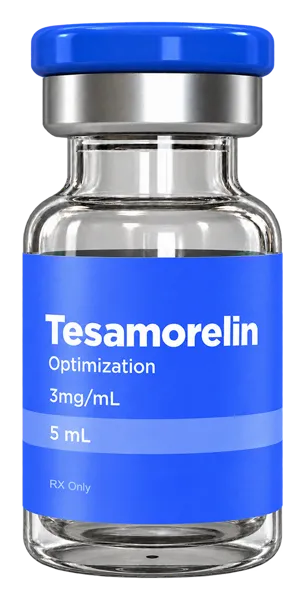 See it at Bodybuilding Peptides