Ipamorelin peptide: what it is, what it does, and where the claims outrun the evidence

The short answer
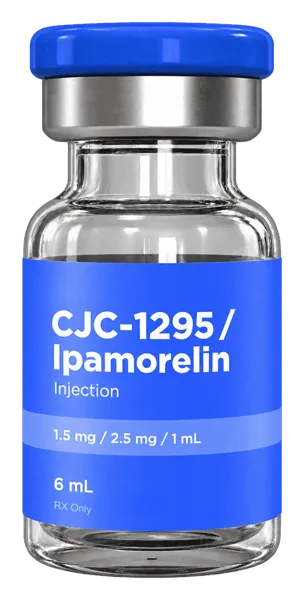
The ipamorelin peptide is a synthetic chain of five amino acids that binds the ghrelin receptor and makes the pituitary release a short pulse of growth hormone, with little effect on cortisol or prolactin. People use it, usually stacked with CJC-1295, for muscle, fat loss, recovery and sleep, but those benefits are untested in humans. It is not FDA-approved.
Ipamorelin is one of the most-searched names in the growth-hormone-peptide world, and it is rarely discussed on its own. It is the half of the “CJC-1295 and ipamorelin” stack that posters describe as the gentle one, promised to add muscle, strip fat, and sharpen recovery and sleep. This page separates two stories that usually get told as one: what the ipamorelin peptide measurably does to growth hormone (GH) and IGF-1, and what people claim it does for them. It covers the evidence level for each claim, side effects, how it compares with its neighbors, and what users report, with a primary source for every claim. It is educational only, and nothing here is medical advice. For how this compound fits the wider map of approved drugs and unapproved research peptides, start with our cross-therapy explainer on what peptides are.
What is ipamorelin?
Ipamorelin is a synthetic pentapeptide, a short chain of five amino acids with the sequence Aib-His-D-2-Nal-D-Phe-Lys-NH2. It was first described by Raun and colleagues in 1998 and introduced in that paper as the first selective growth hormone secretagogue. That phrase defines the whole category. A growth hormone secretagogue does not contain growth hormone; it is a signal that prompts your own pituitary gland to release a pulse of the hormone it already makes. So the ipamorelin peptide is not injected growth hormone, and it is not an anabolic steroid. It sits in a separate class from both, which is the first thing to get straight because the three are constantly conflated online.
The word that made ipamorelin notable in the original research is “selective.” Earlier secretagogues in its family, such as GHRP-6 and GHRP-2, also raised stress hormones when they raised growth hormone. In pigs, Raun and colleagues reported that ipamorelin did not release ACTH or cortisol at levels significantly different from GHRH stimulation, even at doses more than 200 times the amount needed to release growth hormone, and that it did not move prolactin or thyroid-stimulating hormone either. That clean profile is exactly why it drew laboratory interest, and it is the property the marketing leans on hardest. None of it, by itself, says whether ipamorelin does anything useful or safe in a healthy person seeking a better physique. Ipamorelin is also the compound most often paired with CJC-1295, a different peptide that works through a separate receptor.
How is ipamorelin thought to work?
Ipamorelin is thought to work by binding the ghrelin receptor, and almost everything specific about that mechanism comes from laboratory and animal work. The receptor in question is the growth hormone secretagogue receptor type 1a (GHS-R1a), the same receptor the natural “hunger hormone” ghrelin uses, which is why ipamorelin is often called a ghrelin mimetic. When it binds GHS-R1a on the hormone-producing cells of the pituitary, it triggers an intracellular signaling cascade that stimulates growth hormone release. The marketed logic follows from there: more growth-hormone pulses are claimed to raise IGF-1 and, downstream, to support muscle, fat loss, and recovery.
The part the marketing usually leaves out is that this receptor does much more than release growth hormone. The ghrelin receptor system also regulates appetite and food intake, gastrointestinal motility, and glucose and lipid metabolism, and ghrelin and its synthetic mimics are cardioactive molecules with effects on the heart and blood vessels. That breadth matters for two reasons. First, it is why ipamorelin’s only serious clinical development targeted the gut rather than the gym, as the evidence section explains. Second, it is a reminder that a molecule chosen for one effect acts on a receptor with several jobs.
What does ipamorelin do to growth hormone and IGF-1?
In people, ipamorelin produces one short burst of growth hormone, and the published human study did not report IGF-1 at all. The only human pharmacology study we found gave ipamorelin as a 15-minute infusion to healthy men, eight at each of five dose levels. Each dose produced a single episode of GH release, peaking at about 0.67 hours and declining to negligible GH concentrations, and the drug itself had a short terminal half-life of 2 hours (our peptide half-life reference lines this up against CJC-1295, tesamorelin and others). The study measured ipamorelin and GH levels; its abstract reports no IGF-1 data, no body-composition outcome and no repeated dosing.
IGF-1 is where the two stories split. IGF-1 is the growth factor that carries much of growth hormone’s effect on tissue, and it is what the “more GH, more muscle” pitch quietly depends on. The IGF-1 measurement we found for ipamorelin alone comes from rats: 15 days of injections increased the rate of bone growth and body-weight gain, but did not affect total IGF-I levels. Compare that with CJC-1295, whose 2006 study in healthy adults reported IGF-1 rising 1.5- to 3-fold for 9 to 11 days after a single injection. So the measured picture is a brief GH pulse from ipamorelin and a sustained IGF-1 rise from CJC-1295. The idea that ipamorelin by itself raises IGF-1 enough to change a physique is an inference, not something a human study has shown.
What is ipamorelin studied and marketed for?
Ipamorelin is studied and marketed in two almost separate worlds. In the consumer and physique market it is promoted, usually stacked with CJC-1295, for building lean muscle, losing fat, improving sleep, speeding recovery, and slowing the signs of aging. Read those as areas of marketing and hope, not proven uses: the wording of an advertisement (“supports lean-muscle growth”) and the wording of the science (“changed a hormone level in a short study”) are not the same claim. In the clinical-development world, by contrast, ipamorelin’s most serious testing was aimed at the gut. Because the ghrelin receptor drives gastrointestinal motility, it was developed as a possible treatment for postoperative ileus, the sluggish, non-functioning bowel that can follow abdominal surgery.
The network’s physique-focused publication examines the muscle-and-recovery claims in detail. For how the pairing is described and compared, see what CJC-1295 and ipamorelin actually do and the head-to-head on CJC-1295 versus ipamorelin; for the honest version of the physique conversation, see realistic expectations and side effects for GH peptides, how GH peptides are used for physique in 2026, and how injectable secretagogues compare with the oral option in MK-677 versus GH peptides.
What benefits do people claim, and what was actually measured?
Every popular ipamorelin benefit traces back to animal studies or to a GH reading, not to a human outcome trial, and one animal result points the opposite way from the marketing. The table lines up each claimed benefit with the closest thing to evidence we could find.
| Claimed benefit | What was actually measured | In whom | Evidence level in words |
|---|---|---|---|
| More growth hormone | A single GH pulse after each infusion, back to negligible levels afterward (Gobburu et al., 1999) | Healthy men | Small human pharmacology study |
| Higher IGF-1 | No change in total IGF-I after 15 days (Johansen et al., 1999) | Adult female rats | Animal study only; no human IGF-1 data found |
| Muscle and strength | In rats given a muscle-wasting steroid, adding ipamorelin for 3 months significantly increased calf-muscle tension compared with the steroid alone | Rats on glucocorticoids | Animal study only; no human muscle trial |
| Fat loss | Ipamorelin increased fat pad weight relative to body weight and raised food intake; the authors concluded secretagogues increase body fat through mechanisms that may include increased feeding | Mice | Animal study, pointing against the claim |
| Bones and recovery | Twelve weeks raised bone mineral content, but through bigger bones, with volumetric bone density unchanged | Adult female rats | Animal study only |
| Gut recovery after surgery | Time to tolerating a solid meal did not differ significantly from placebo | Bowel-surgery patients | One randomized phase 2 trial; negative |
| Sleep and anti-aging | No ipamorelin study measuring either turned up in our PubMed search | None | No published evidence found |
Two rows deserve a second look. The muscle signal is real but narrow: it comes from rats whose muscles were being broken down by a steroid drug, which is not the same situation as a healthy lifter trying to add size. And the fat-loss row is the most awkward one for the marketing. In the mouse study, ipamorelin raised body fat and appetite, consistent with its action on the hunger-hormone receptor; the same authors found that growth hormone itself did not raise fat. A mouse study cannot settle what happens in people, but it is the only direct test of ipamorelin and body fat we found, and it does not support the “fat-burning peptide” label.
What does the evidence actually show?
The human efficacy evidence for ipamorelin is thin, and the single completed randomized trial did not meet its primary endpoint. That trial, published by Beck and colleagues in 2014, was a prospective, randomized, double-blind, placebo-controlled phase 2 study of intravenous ipamorelin for postoperative ileus in patients recovering from bowel-resection surgery. Patients received 0.03 mg/kg of ipamorelin or placebo twice daily. On the primary endpoint, the time from the first dose to tolerating a standardized solid meal, the median was 25.3 hours with ipamorelin versus 32.6 hours with placebo, a difference that was not statistically significant (p = 0.15). The authors concluded that the drug was well tolerated but that there were no significant differences between ipamorelin and placebo in the key and secondary efficacy analyses. Development did not go on to approval.
Sit with what that means. The most rigorous human test ipamorelin has ever had was for a gastrointestinal problem, not for muscle or fat, and it came back negative on its main measure. For the physique and recovery uses that actually drive its popularity, there is no completed randomized human trial establishing a body-composition benefit at all; that case rests on growth-hormone-release pharmacology, animal studies, and short-term hormone measurements in volunteers. A 2026 review of GH-axis peptides sold as research compounds made the same point, sorting them into evidence tiers that run from regulatory-grade randomized trials down to a complete absence of human studies and highlighting the uncertainty around their performance and recomposition claims. This does not prove ipamorelin does nothing. It means the studies that could show whether it delivers the advertised results in people have not been done.
What are the reported side effects and safety unknowns?
Ipamorelin’s long-term safety in humans is largely unknown, because it has barely been studied for the way it is actually used. The postoperative-ileus trial reported that it was well tolerated at 0.03 mg/kg twice daily for up to seven days, which is genuinely reassuring for that setting, but it describes a short, supervised, intravenous hospital course in monitored patients. It says very little about months of self-administered injections bought online, which is the real-world pattern in the physique market.
There are also mechanism-based reasons for caution. Ipamorelin acts on a receptor that also governs appetite, gastrointestinal motility, and glucose and lipid metabolism, so appetite and metabolic effects are biologically expected rather than surprising; the mouse study above found higher food intake. Across the whole class of GH-axis peptides, the 2026 review lists reported adverse effects including prolactin and cortisol elevations, appetite changes, blood-sugar disturbances, fluid retention, muscle and joint aches, and injection-site reactions. That list covers the category, not ipamorelin alone, and nobody has measured how often each happens with ipamorelin specifically.
Layered on top of the biology is a product-quality problem. A “research use only” vial is not required to be sterile, to contain the labeled dose, or to be free of contaminants. A 2018 peer-reviewed analysis of falsified peptide drugs bought from suspected illegal internet pharmacies found purity ranging from 5% to 75% for some peptides, and toxic elemental impurities including arsenic well above the limit for injectable drugs. So the safety picture stacks two unknowns at once: what the molecule does over time in a healthy body, and whether the vial contains what the label claims. Our companion explainer on what the evidence shows about peptide side effects walks through both.
What is the CJC-1295 ipamorelin peptide good for?
The CJC-1295 and ipamorelin blend is sold for muscle, fat loss, recovery and sleep, but no published clinical trial has tested the combination for any of them. The logic behind the pairing is pharmacological: CJC-1295 is a long-acting analog of growth hormone-releasing hormone (GHRH), and ipamorelin is a ghrelin mimetic, so the two press different receptors that both lead to GH release. What each has shown alone is limited to hormone readings: a sustained rise in GH and IGF-1 in healthy adults for CJC-1295, and a single short GH pulse for ipamorelin. A PubMed search for ipamorelin in October 2026 turned up no clinical trial of the two together, so the claim that they work better as a pair, and the safety of using them together, are both untested. For more on the pairing, see CJC-1295 versus ipamorelin and our CJC-1295 overview.
Ipamorelin vs CJC-1295 vs tesamorelin vs sermorelin
All four are traded online as “GH peptides,” but only ipamorelin works through the ghrelin receptor, and only tesamorelin has a large randomized human trial behind it. The table is a map of the evidence, not a ranking.
| Compound | How it works | Human evidence, in words |
|---|---|---|
| Ipamorelin | Ghrelin receptor agonist (GH secretagogue) | One small pharmacology study measuring GH (1999); one phase 2 gut trial that missed its primary endpoint (2014) |
| CJC-1295 | Long-acting GHRH analog | Small, short trials in healthy adults measuring GH and IGF-1 levels (2006) |
| Tesamorelin | GHRH analog | A large randomized trial: in 412 patients with HIV, visceral fat fell 15.2% versus a 5.0% rise on placebo over 26 weeks |
| Sermorelin | GHRH fragment (first 29 amino acids) | Small human studies; in 11 older men, six weeks raised nighttime GH but did not change IGF-1 or DEXA measures of muscle and fat, though two of six strength measures improved |
The useful pattern is that none of the four has a trial in healthy lifters with muscle or strength as the main outcome. Tesamorelin’s FDA approval, as Egrifta, covers one narrow use: HIV-related abdominal fat. For the full picture on it, see our tesamorelin overview.
What does ipamorelin cost?
There is no reference price for ipamorelin, because there is no approved ipamorelin product, no manufacturer list price and no insurer coverage to anchor one. Prices are set by individual sellers and vary with the form, the amount per vial and the length of supply. Ipamorelin is also sold premixed, with CJC-1295 or with tesamorelin, and a blend cannot be priced against a single peptide unless you know how much of each it contains. Our 2026 peptide and GLP-1 cost index explains why we do not publish one price range for research peptides. In the community posts we tracked, cost comes up as a reason to pick one GH peptide over another: users weigh which of these compounds are worth the money, and some say CJC-1295 wins on cost while tesamorelin wins on tolerability.
Is ipamorelin banned in sport?
Yes. Ipamorelin is explicitly prohibited at all times under the World Anti-Doping Agency’s S2 category covering growth hormone secretagogues, so any athlete in a tested sport should treat it as banned in and out of competition.
What are people saying about ipamorelin?
Online, ipamorelin is talked about as the gentle entry point to growth-hormone peptides, and as half of a stack more than as a compound in its own right. Our community tracker collected 16 posts on X that discuss ipamorelin on July 15 and 16, 2026, and 17 posts on CJC-1295 from July 13 to 19, 2026. The full summaries, with links to the original posts and a few hand-picked Reddit threads, are on our ipamorelin community page. The threads that stood out:
- A starter peptide. One widely shared post framed ipamorelin as a common first growth-hormone peptide because of what the poster called a clean side-effect profile, with no cortisol, prolactin or hunger effects. The cortisol and prolactin part echoes what Raun and colleagues measured in pigs in 1998. The “no hunger” part is shakier: ipamorelin acts on the hunger-hormone receptor, and the one mouse study of body fat found it raised food intake.
- “It amplifies every pulse.” Posters distinguish GHRH compounds such as CJC-1295 and tesamorelin from ghrelin mimetics such as ipamorelin, hexarelin and MK-677, and describe ipamorelin as amplifying each natural growth-hormone pulse. The human data are narrower: one infusion produced one GH episode that then declined to negligible levels. Whether repeated use amplifies natural pulses over weeks has not been studied in people.
- The stack is the default. In the CJC-1295 threads, many users describe running CJC-1295 as part of a stack with ipamorelin rather than alone, and several say most write-ups are either dry clinical summaries or vendor pages, and that they want first-hand accounts.
- Peptides versus HGH. Several users argue that secretagogues nudge the body’s own pulses, while injected growth hormone supplies a flat, constant level that they say can suppress natural production. That is user reasoning rather than a tested comparison.
- Rankings and cost. One shared tier list put ipamorelin in the same tier as CJC-1295 and sermorelin, below HGH and tesamorelin. Other commenters group it with tesamorelin, CJC-1295, sermorelin and MK-677 when weighing which are worth the cost.
- Worries. The concerns users raise most are insulin resistance, high IGF-1 and worse sleep. One poster argued the first two are overstated; another said secretagogues made their own sleep worse, which cuts against the sleep benefit the stack is often sold on.
The tracker’s own rough read of tone in the ipamorelin posts was 40% positive, 35% mixed, 15% skeptical and 10% negative, an anecdotal impression of public posts rather than a representative measure. These are self-reports from one platform over a few days, not evidence of benefit or safety. What they show is what users weigh: tolerability, cost and how the stack is built, much more than the trial data.
How to think about ipamorelin
If you are weighing ipamorelin, the most useful move is to separate the chemistry from the claims. The chemistry is real and genuinely elegant: a selective secretagogue that produces a GH pulse without dragging cortisol and prolactin along with it. The claims are mostly hope. No human study has shown it raises IGF-1, the physique and recovery benefits have never been tested in a completed human trial, the one animal study of body fat went the wrong way, and the one adequately controlled human trial, in a different use entirely, missed its primary endpoint. The safety record is short and was earned in a hospital, not in months of self-directed use.
If your actual goal is more muscle, less fat, better recovery, or better sleep, it is worth starting with that goal rather than the peptide, ideally with a licensed clinician who can order the right testing and weigh training, nutrition, sleep, or an approved medication where one fits. For the machinery behind how compounded peptides are made, see how compounding pharmacies work.
Status: Not FDA-approved; sold by some telehealth providers as a compounded prescription. What this status means.
Educational information only, not medical advice. Every scientific statement on this page is sourced to the primary references linked above; community statements come from our tracker’s summaries of public posts. Updated October 12, 2026.
Sources (16)
Advertising disclosure: links marked "Paid link" go to Bodybuilding Peptides (trybbpeptides.com), an affiliate destination, and The Treatment Report may earn a commission if you buy there. Our coverage is independent of that relationship, and nothing on this page is medical or legal advice.
 See it at Bodybuilding Peptides