The MOTS-c peptide: what the 'exercise in a vial' actually does in mice and in people

The short answer
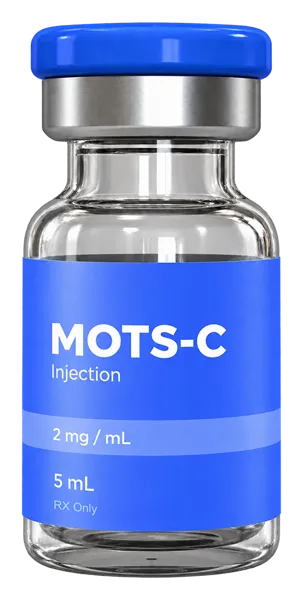
The MOTS-c peptide, also searched as MOTS c peptide, is a 16-amino-acid signal encoded in mitochondrial DNA and sold online as 'exercise in a vial.' In mice it curbed diet-induced obesity and insulin resistance and improved running capacity. In people, the published data are observational: exercise raises the body's own MOTS-c and levels are lower with age; no completed trial has tested taking it.
MOTS-c is the peptide most often sold as “exercise in a vial,” a phrase that does a lot of quiet work. It shows up in longevity podcasts, gym forums, and wellness clinics as a mitochondrial upgrade that hands you the benefits of training without the training, usually with the evidence caveats trimmed away. This page puts them back. It explains what the MOTS-c peptide actually is, what it does in mice and in people, how far the online community has run ahead of the data, what is known about its side effects, and what users report, with a primary source for every claim. It is educational only, and nothing here is medical advice. For the wider context of how peptides fit together, start with our cross-therapy explainer on what peptides are, and for the most-searched recovery peptide, our BPC-157 overview.
What is the MOTS-c peptide?
The MOTS-c peptide (often searched as “MOTS c peptide,” with or without the hyphen) is a mitochondrial-derived peptide, which is what makes it genuinely unusual. Most peptides and proteins your body builds are encoded by genes in the cell nucleus, but MOTS-c is read from a short stretch of the mitochondria’s own genome. It was first described in a 2015 paper in Cell Metabolism, which identified it as a 16-amino-acid peptide encoded within the mitochondrial 12S ribosomal RNA. The name is a compression of that origin: the mitochondrial open reading frame of the 12S rRNA, type c. Because it comes from the organelle that runs cellular energy production, MOTS-c is usually described as a signal the mitochondria use to report their energy status to the rest of the cell and body, which is why it is sometimes called a mitochondrial hormone or “mitokine.”
One detail recurs across the literature and matters for the marketing. The body’s own MOTS-c is not fixed. The founding study noted that MOTS-c levels in human plasma decline with age, and later reviews describe the same pattern in both muscle and blood, reporting that blood MOTS-c levels in young people run measurably higher than in middle-aged and older people. That decline-with-age observation is exactly the kind of pattern that makes a molecule interesting to longevity researchers, and it is also the seed of a marketing story that runs well ahead of what has actually been demonstrated in people. None of this, by itself, says anything about whether dosing MOTS-c is safe or effective. Those are separate questions, and the rest of this page takes them one at a time.
What does the MOTS-c peptide do?
In the lab, the MOTS-c peptide acts as a metabolic signal: it is thought to work mainly through AMPK, an ancient cellular fuel gauge that switches on when energy runs low, but almost everything known about its mechanism comes from cell and animal experiments rather than human ones. In the founding 2015 work, the researchers reported that the peptide’s cellular actions inhibit the folate cycle and its tethered de novo purine biosynthesis, leading to AMPK activation; more specifically, the peptide drives accumulation of AICAR, a potent activator of AMPK. When AMPK is activated, cells tend to take up more glucose and shift toward burning fuel rather than storing it, which is why the same study reported that its primary target organ appears to be the skeletal muscle, the body’s largest sink for blood sugar.
A 2023 review in the Journal of Translational Medicine summarizes the same idea, describing how MOTS-c acts mainly through the Folate-AICAR-AMPK pathway, thereby influencing energy metabolism, insulin resistance, inflammatory response, exercise, aging and aging-related pathologies. There is a second proposed mechanism worth understanding, because it is where much of the aging interest comes from: the same review notes that MOTS-c can be translocated to the nucleus in response to metabolic stress and regulate adaptive nuclear gene expression, meaning the peptide appears to move into the nucleus and help switch on stress-response genes. Both pathways are biologically plausible and supported by laboratory data, but a mechanism is a hypothesis about why something might matter, not proof that dosing it helps a person. When a headline says MOTS-c “works,” what that usually rests on is an improved measurement in a cell dish or a rodent, and that distinction is the single most common thing marketing blurs.
What is MOTS-c peptide used for?
People use MOTS-c for three overlapping goals: metabolic health (insulin sensitivity, blood sugar, body fat), exercise performance and endurance, and healthy aging. All three are areas of investigation, not proven uses, and the wording matters: an ad says “boosts your metabolism,” while the science says “changed an outcome in a mouse.” The “exercise in a vial” nickname comes from a real human finding, that a bout of exercise sharply raises the body’s own MOTS-c, which marketing then turns around into a claim about taking it.
This hub page keeps the overview short and sends the detail to the network’s dedicated pages:
- Benefits by goal: our longevity publication breaks down what the metabolic and exercise research on MOTS-c actually shows, including the AMPK biology and why the strongest data are in mice.
- Weight loss: where MOTS-c sits next to approved GLP-1 drugs and other trending compounds in our guide to peptides for weight loss.
- Longevity: how it compares with the other popular anti-aging peptides in longevity peptides in 2026: what the evidence shows, and in NAD versus peptides for longevity.
What does the evidence actually show?
Almost all of the efficacy evidence for MOTS-c comes from mice and cells, not from humans. The foundational metabolic result is genuinely striking within that limit: in the 2015 Cell Metabolism study, the authors reported that MOTS-c treatment in mice prevented age-dependent and high-fat-diet-induced insulin resistance, as well as diet-induced obesity. Animals that would otherwise have become insulin-resistant and fat on a rich diet were partly protected when given the peptide. A 2021 study in Nature Communications added the performance and aging data most often quoted: it reported that MOTS-c treatment improved treadmill capacity in young, middle-aged, and old mice, with old animals running roughly twice as long and about 2.16 times as far as untreated controls. Late-life intermittent dosing also improved grip strength, stride length, and walking capacity. Crucially, the lifespan signal in that same work was only a trend toward increased median and maximum lifespan of about 6 to 7 percent, and it was not statistically significant at the reported threshold. Even in the mice, the longevity headline was a trend, not a proven effect.
The human evidence is far thinner and points in a specific direction that marketing tends to reverse. The strongest human finding is that exercise raises the body’s own MOTS-c: in the 2021 Nature Communications study, ten sedentary healthy young men exercised on a stationary bicycle, and the researchers measured roughly an 11.9-fold rise in MOTS-c inside skeletal muscle after exercise, with a smaller rise in the bloodstream that returned toward baseline within about four hours. Read the direction of that finding carefully. It shows that exercise increases MOTS-c, an observation about a biomarker responding to activity. It does not show the reverse, that injecting MOTS-c reproduces the benefits of exercise in a person. The “exercise in a vial” pitch quietly flips the arrow on this study, turning “exercise raises MOTS-c” into “MOTS-c substitutes for exercise,” a claim the human data do not support.
Everything else on the human side is observational rather than interventional, and the review literature is candid about it. A 2023 review in Frontiers in Endocrinology states plainly that MOTS-c has been used less frequently in disease treatment, and no effective method of applying MOTS-c in the clinic has been developed, while the 2023 Journal of Translational Medicine review acknowledges that many questions remain unclear about how the peptide even functions. The anti-doping authorities reach the same conclusion from the sport side: the US Anti-Doping Agency notes that MOTS-c remains an experimental peptide with no completed clinical trials. It is worth being precise about what this does and does not mean. It does not mean MOTS-c has been proven not to work. It means the studies that could show whether dosing it helps people, controlled and published in humans, have not been done. Preclinical promise and human proof are different things, and MOTS-c sits almost entirely on the promise side of that line.
Metabolic vs muscle claims: what was actually measured?
The claims sold under the MOTS-c name split into two camps, metabolic (fat, blood sugar, insulin) and muscle (endurance, strength, lean mass), and almost every row below was measured in mice. Evidence level in words: consistent animal studies, one human biomarker observation, and no published human treatment results.
| Claim you will see online | What was actually measured | Mouse or human |
|---|---|---|
| ”Prevents weight gain and fat” | In mice on a high-fat diet, MOTS-c prevented obesity, and the difference was not explained by food intake, which was identical between groups; a later study found the curbed weight gain was largely driven by reduced fat accumulation, not loss of lean mass | Mouse |
| ”Improves insulin sensitivity” | After 7 days of MOTS-c injections, mice cleared glucose faster in a glucose tolerance test, confirmed with clamp studies | Mouse |
| ”Supports blood sugar with age” | In very old mice treated three times a week, non-fasting blood glucose was better maintained | Mouse |
| ”Exercise in a vial” (endurance) | Treadmill running time and distance; old mice ran about 2-fold longer and 2.16-fold farther than untreated old mice | Mouse |
| ”Builds muscle and strength” | In young mice, the higher dose significantly increased lean mass, but daily MOTS-c did not improve grip strength; grip strength did improve in very old mice treated late in life | Mouse |
| ”Exercise raises MOTS-c, so MOTS-c works like exercise” | Ten young men cycled once; MOTS-c in their muscle rose about 11.9-fold. Nothing was given to them | Human (biomarker only) |
| “Burns fat in people” | Not measured yet. A phase 2a trial of MOTS-c in adults with prediabetes and overweight or obesity measures insulin sensitivity at 12 weeks; it is recruiting | Human (no results) |
| “Extends lifespan” | A trend toward longer median and maximum lifespan that was not statistically significant | Mouse |
Read across the right-hand column and the pattern is plain. The muscle side of the pitch rests on treadmill tests and lean-mass scans in rodents, and the metabolic side on diet experiments in rodents. The only human row with data measures the body’s own MOTS-c responding to exercise, which is the reverse of the claim built on it.
What are the side effects of MOTS-c?
MOTS-c’s human safety profile is largely unknown, because it has barely been studied in people. Marketing often calls research peptides “well tolerated,” but there is no human safety record to back that up here. The US Anti-Doping Agency states the situation plainly: it is unknown under what conditions, if any, it is safe to use MOTS-c because there are no completed clinical trials, and it adds that there is no data available on what happens with long-term use. The same source lists side effects reported by people who say they bought it online, including increased heart rate or heart palpitations, injection-site irritation, insomnia, and fever. Those are reports, not a characterized safety profile. The closest thing to trial data comes from CB4211, a drug developed from MOTS-c rather than MOTS-c itself: its sponsor reported that the only adverse events in more than 10% of people receiving CB4211 in the four-week phase 1b portion were transient and generally mild to moderate injection site reactions, with no serious adverse events. That is a company press release about a different molecule, so the honest summary is that the risks of MOTS-c itself are largely uncharacterized. Our sister site’s MOTS-c side effects guide sets out the full human safety record.
Layered on top of those biological unknowns is a product-quality problem specific to how MOTS-c is actually sold. Because it is not a regulated medicine, the vials shipped by online vendors carry none of the guarantees a pharmacy product does. As an independent expert review of the peptide market notes, the “third-party” certificates of analysis that vendors point to are often produced by the vendors themselves, and reliance on those certificates is itself an admission that the normal guardrails of identity, potency, sterility and quality control are absent. That same review is blunt about the practice of reconstituting research powder and injecting it, calling it high-risk, uncontrolled human self-experimentation. The floor here is lower than most buyers assume: even properly licensed compounding, which sits well above a research chemical on the safety ladder, produces drugs the FDA has not reviewed for safety, effectiveness, or quality before they are marketed. A “research use only” vial made outside any pharmacy system carries that same category of hazard with none of the safeguards. So the safety picture carries two layers of uncertainty at once: what the molecule does in a human body over time, and whether the vial even contains what the label claims, at the purity and sterility an injection would require. Our hub explainer on what the evidence shows about peptide side effects walks through both layers in more detail.
How long do people take MOTS-c?
No study has established how long MOTS-c can be taken, because no human trial of taking MOTS-c itself has finished. The durations below are what research has used, plus what users say, reported for context and not as a protocol:
| Source | What was given | How long | Type |
|---|---|---|---|
| 2015 founding study | MOTS-c injections | 7 days before insulin-sensitivity testing | Mouse |
| 2021 Nature Communications study | MOTS-c injections | 2 weeks of daily treatment before treadmill tests; in the aging arm, three times a week starting late in life and continued through old age | Mouse |
| CB4211 phase 1a/1b | CB4211, a MOTS-c analog | Single doses, 7 daily doses, or 28 daily doses, depending on the group | Human, completed 2021, no results posted on the registry |
| MOTS-c phase 2a | MOTS-c or placebo | Once daily for 12 weeks, with adverse events tracked to week 16 | Human, recruiting |
| Community report (X, July 2026) | Self-sourced MOTS-c | One poster described revising his opinion after a month of daily use | Anecdote, not data |
So among the sources above, the longest human exposure with a reported outcome is four weeks of an analog, and USADA notes there is no data available on what happens with long-term use. Anyone running MOTS-c for months is past anything that has been measured in people.
Does MOTS-c burn visceral fat?
Nobody has shown that it does in people. The fat-loss claims trace to the 2015 mouse study, in which MOTS-c treatment prevented diet-induced obesity and insulin resistance in animals on a high-fat diet. That is a real and striking result, but it was about preventing weight gain in mice, and it did not measure visceral fat in humans. No completed human trial has tested whether taking MOTS-c reduces belly fat, total fat or body weight. For the metabolic side in more depth, our sister site covers what MOTS-c’s metabolic function research shows. For how MOTS-c compares with two other compounds discussed for fat loss, see our overviews of 5-Amino-1MQ, which also has only cell and mouse data, and retatrutide, which has human trial results.
Is MOTS-c banned in sport?
Yes, and unusually clearly. Because its defining mechanism is AMPK activation, the US Anti-Doping Agency states that MOTS-c is prohibited at all times under Section 4.4 Metabolic Modulators, as an activator of AMP-activated protein kinase. USADA also notes there is no way to obtain a therapeutic-use exemption for it, because there is no approved medical use to justify one.
What does MOTS-c cost?
There is no reference price for MOTS-c, because there is no approved MOTS-c product: what a buyer pays is set by whoever sells it, whether a research-chemical vendor or a telehealth provider prescribing a compounded version. The real cost also depends on how long someone runs it, which, as the section above shows, is the variable with the least evidence behind it. Our longevity site’s MOTS-c side effects guide records a dated price snapshot. Whatever the figure, weigh it against the evidence level: the outcomes people are paying for have been measured in mice.
What are people saying about MOTS-c?
MOTS-c has a more positive and more experimental crowd than most peptides. In 19 posts on X that our community tracker collected between July 16 and 19, 2026, the main threads were:
- Energy and mitochondria. Users most often describe it as an energy and mitochondrial-function peptide. Some report noticeable improvements, and one poster who said he expected to dismiss it revised his verdict after a month of daily use.
- Stacking with SS-31. The most common stack is MOTS-c with SS-31, framed as SS-31 protecting existing mitochondria and MOTS-c supporting new ones. Users disagree about running the two together or one after the other, and share their own N=1 orders rather than any tested protocol.
- Wider routines. Posts mention MOTS-c alongside NAD+, GHK-Cu, GLP peptides and pre-workout, often timed around fasting, cardio or training.
- Hype fatigue. Skeptics describe MOTS-c as the latest stop in a peptide hype cycle and call out people who jump on each new compound.
These are self-reports from one platform over four days. They tell you what users hope MOTS-c does, energy and metabolic support, which is exactly the area where the human evidence is still missing.
How to think about MOTS-c
If you are weighing MOTS-c, the most useful move is to separate the chemistry from the claims. The chemistry is real and genuinely interesting, a tiny peptide written into the mitochondrial genome that responds to exercise and declines with age. The claims are mostly hope built on mouse data and a biomarker observation, because the human trials that would confirm them have not been run. “Exercise in a vial” describes what the mice showed, not what any person has been shown to get.
If your actual goal is better metabolic health, more durable performance, or a longer healthspan, start with that goal, ideally with a licensed clinician, who can weigh resistance training, sleep and protein, an approved medication where clinically appropriate, or structured care alongside anything you are reading about.
Status: Not FDA-approved; sold by some telehealth providers as a compounded prescription. An FDA advisory committee reportedly voted in July 2026 to recommend allowing pharmacies to compound it; nothing has changed yet. What this status means.
Educational information only, not medical advice. Every scientific statement on this page is sourced to the primary references linked above. Updated October 12, 2026.
Sources (11)
Advertising disclosure: links marked "Paid link" go to Bodybuilding Peptides (trybbpeptides.com), an affiliate destination, and The Treatment Report may earn a commission if you buy there. Our coverage is independent of that relationship, and nothing on this page is medical or legal advice.
 See it at Bodybuilding Peptides